In addition to the direct victims on the scene, the conflict has also driven thousands of other women into separation, the loss of loved ones, or forced them to shoulder the burden of supporting their families alone in conditions lacking basic necessities.
Casualty statics
The recent upheavals went beyond mere military reports and truly became a humanitarian earthquake, spreading its impact to 24 out of Iran's 31 provinces and cities, completely disrupting the lives of the people.
Most heartbreaking of all is the devastating situation at the Minab hotspot. Updated figures show the number of students killed at the school has risen to 148. This is not just a dry statistic, but marks one of the deadliest incidents involving children in recent years, leaving an irreplaceable void in the families and community.
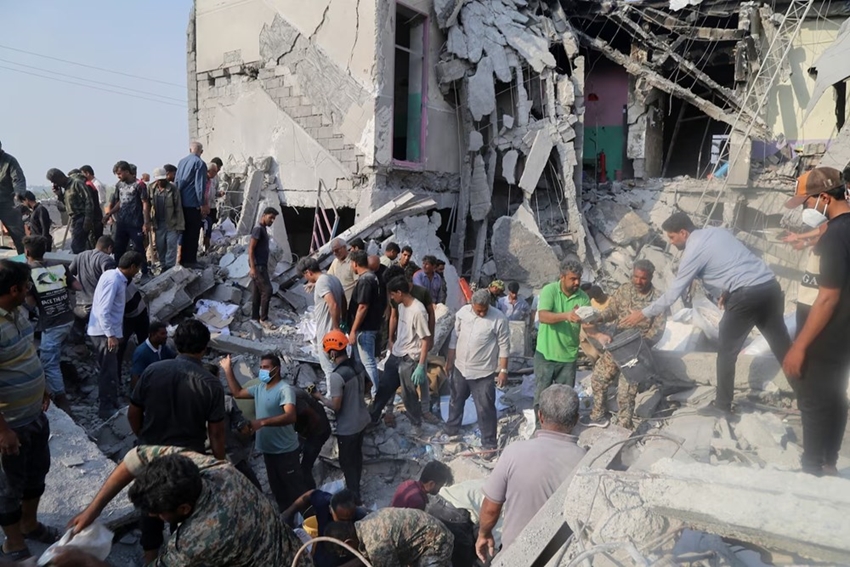 |
| At the scene, people continued to dig through the rubble in search of the victims' bodies. |
Long-lasting consequences for the future of the world
Beyond the casualty figures lie the long-term consequences for women and children. With schools and playgrounds destroyed, girls' right to education and development is severely disrupted. The psychological trauma from the explosion will haunt them for life, transforming dreams of knowledge into fear at the slightest loud noise.
For women, war often brings a "double burden." With healthcare infrastructure overwhelmed, access to reproductive health services and family support becomes a luxury. Women who lose children, husbands, or parents in air raids not only suffer emotional pain but also face an uncertain future as social safety nets are paralyzed by conflict.
A call from the international community
The UN High Commissioner for Human Rights and many child protection organizations also issued an urgent message, calling on all parties to ensure the safety of civilian facilities such as schools and hospitals, which are given special priority protection under international conventions.
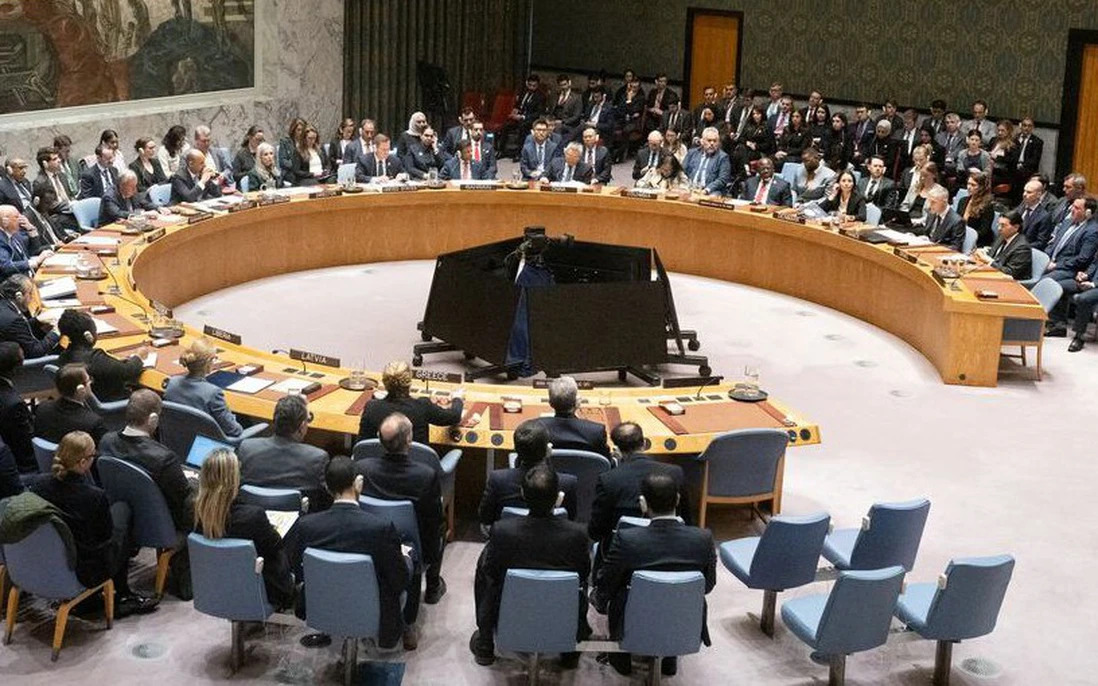 |
| The United Nations Security Council held an emergency meeting. |
After what happened in Minab and Lamerd, what people most hope for is perhaps not pronouncements of right or wrong, but the restoration of peace to the families who have suffered loss. The question "Who protects women and children?" actually has only one answer: they need to live without fear in their own homes and classrooms. Hopefully, the conflict will end soon, so that no one else has to endure separation and everyone can safely return home./.