A healthcare worker administers a measles vaccine to a child at a vaccination site in Hanoi. (Photo: VNA)
Vietnam has made remarkable progress in protecting children from vaccine-preventable diseases, according to the latest World Health Organisation (WHO) and UNICEF estimates of national immunisation coverage (WUENIC) released on July 15.
In 2024, Vietnam achieved 99% coverage for the first dose of the diphtheria, tetanus and pertussis vaccine, up from 80% in 2023. Immunisation coverage in the country has not only rebounded to the high levels seen before the COVID-19 pandemic but has now surpassed the rates recorded in 2019.
This improvement led to a reduction in the number of zero-dose children – that is, children who had not been protected by any vaccine – from 274,000 in 2023 to just 13,000 in 2024, a decline of over 95%. Compared to the previous year, many more young Vietnamese children are protected against common vaccine preventable diseases.
In 2024, Vietnam had well above global averages for immunization coverage, thanks to strong Government leadership, great efforts by health-care workers and support from parents and the community, the two organisations said.
WHO Deputy Representative in Vietnam Dr Jennifer Horton said the estimates were evidence of the hard work of the health sector to bolster routine immunization following the pandemic and conduct outbreak response vaccination activities during the 2024-2025 measles outbreak. Almost 1.3 million children were vaccinated against measles in mass vaccination campaigns in 2024 and activities continued into 2025.
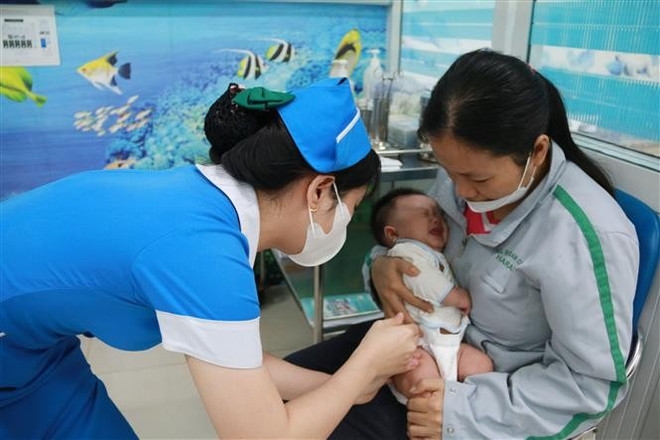 |
| A two-month-old baby girl receives a six-in-one vaccine at Dong Nai Children’s Hospital. (Photo: VNA) |
“This positive increase in vaccination coverage numbers is a tribute to the thousands of dedicated health-care workers who have worked so hard to restore life-saving immunisation services after a sustained decline due to pandemic disruptions and stockouts,” she said.
This achievement is a powerful reflection of Vietnam’s unwavering commitment to child health and the strength of its primary healthcare system,” said Dr Nguyen Huy Du, Acting Chief of Child Survival and Development, UNICEF Vietnam.
“At a time when 1.8 million children across UNICEF’s East Asia and Pacific region remain unvaccinated, Vietnam’s success offers a clear message: with strong political will, timely and adequate provision of immunisation supplies and outreach sessions, and community engagement, it is possible to reach every child. We commend Vietnam for its leadership toward closing the immunisation gap and ensuring that no child is left behind.”
The country also recorded a 32-percentage point increase in the proportion of children protected by three doses of diphtheria, tetanus and pertussis vaccine, reaching 97% in 2024, up from 65% the previous year. This indicates not only improved access but also strong follow-through in completing the full vaccination schedule.
Additionally, coverage for the first dose of the measles vaccine rose significantly, from 82% in 2023 to 98% in 2024, protecting more children from one of the most contagious diseases.
Despite these gains, challenges remain. Vietnam still has 40,000 children who are unvaccinated with the third dose of the diphtheria, tetanus and pertussis vaccine or have not received the full course of vaccinations, and 27,000 children who missed their first dose of the measles vaccine. These gaps highlight the need for continued investment in community outreach, health worker training and efforts to counter vaccine misinformation.
The two organisations explained that children may remain un- or under-vaccinated due to various factors including geographic barriers, limited access to services in remote or underserved areas, and lingering effects of the COVID-19 pandemic on the health system.
Ensuring secure and consistent vaccine supply chains, especially during current health system restructuring, will be critical to maintaining high coverage. To close the remaining gaps, private health-care providers should be encouraged to recommend and administer all routine immunisations, and local authorities should be supported to implement tailored strategies that reach the most vulnerable populations, they suggested.
WHO and UNICEF urged continued efforts to catch up with children who are still missing out on vaccines, particularly in hard-to-reach communities. Even small declines in coverage can lead to dangerous outbreaks and place additional strain on the health system.
Vietnam's example demonstrates that even in the face of global challenges, rapid progress is possible with targeted, equity-focused strategies - but only if countries act decisively to protect and build on these achievements, they said./.