Elderly people do morning exercises in the Hoan Kiem Lake area in Hanoi. (Photo: VNA)
Vietnam is undergoing one of the fastest population ageing processes in the world. While this reflects significant socio-economic progress and improvements in healthcare, it also poses unprecedented challenges to social welfare systems and public health.
According to the World Health Organisation (WHO), transforming “population ageing” into “healthy ageing” will require a comprehensive, long-term strategy which shifts from a treatment-centred approach to prevention and builds an integrated, people-centred care ecosystem.
By 2050, around 25% of Vietnam’s population is projected to be aged 60 or older, driven by historically low fertility rates and rising life expectancy thanks to medical progress. However, longer lives do not always translate into healthier years. Many older people still spend their final decade coping with illness or functional decline, often facing multiple conditions such as hearing loss, cataracts, osteoarthritis, diabetes, depression and dementia.
Dr Angela Pratt, WHO Representative in Vietnam, noted that most common non-communicable diseases are preventable or can be delayed through effective risk-factor management. Smoking, harmful alcohol use, unhealthy diets and physical inactivity remain leading causes of ill health in later life. Establishing healthy lifestyle habits early, alongside preventive care, regular screening and early detection, is therefore essential.
While acknowledging Vietnam’s progress in expanding community-based health services and prioritising non-communicable disease screening, Dr Pratt pointed to persistent gaps in extending healthy life expectancy and ensuring equitable access to long-term care.
Healthy ageing, she stressed, does not mean being disease-free. Many older people live with chronic conditions, but with proper management they can maintain independence, preserve quality of life and continue pursuing personal goals. In this context, older persons should be recognised not only as care recipients, but also as valuable contributors of knowledge, skills and experience to society.
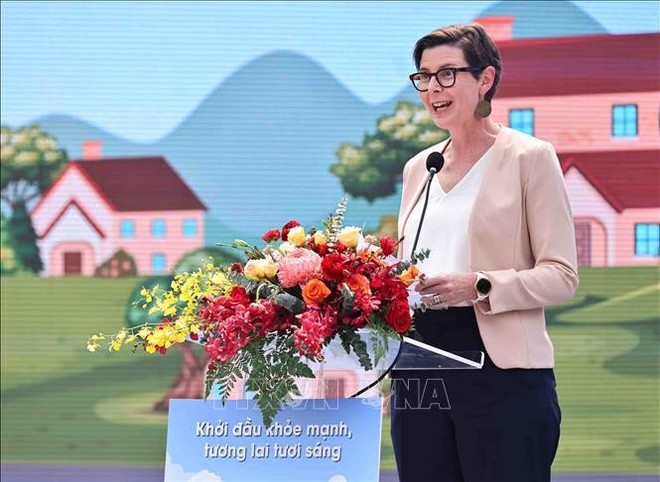 |
| Dr Angela Pratt, WHO Representative in Vietnam (Photo: VNA) |
Two strategic priorities
As Vietnam’s population ages rapidly, Dr Pratt identified two strategic priorities: strengthening primary healthcare and developing a formal long-term care system. These measures are essential not only for healthy ageing, but also as long-term investments with wide-ranging socio-economic returns.
Urbanisation, migration and changing family structures mean that more older people now live alone or lack adequate family care. Even within multi-generational households, caregiving capacity is often limited, especially as healthcare needs increase in later life. Without appropriate services, ageing risks becoming a heavy burden for individuals and families alike.
A strong primary healthcare system, Dr Pratt said, is the foundation. Up to 90% of healthcare needs, including those of older adults, can be addressed at this level. Conditions such as hypertension, diabetes, cardiovascular and respiratory diseases can be effectively managed in primary care settings if health workers are properly trained and equipped. Weak primary care, by contrast, leads to unnecessary pressure on higher-level hospitals.
To support this approach, the WHO has introduced the Integrated Care for Older People (ICOPE) framework, which guides primary healthcare workers in conducting comprehensive assessments and supporting physical, mental and social functioning. The accompanying ICOPE App enables systematic needs assessments and personalised care planning.
Dr Pratt welcomed Vietnam’s strong political commitment to strengthening primary healthcare and preventive services, reflected in major Party and State policies, notably Politburo Resolution No. 72-NQ/TW on breakthrough solutions to improve public health protection and care. Under the roadmap, from 2026 citizens will receive free annual health check-ups or screenings, while by 2030 basic healthcare costs will be covered within health insurance benefits.
All commune-level health stations are set to be upgraded in infrastructure, equipment and human resources. Health insurance coverage is expected to exceed 95% of the population by 2026 and reach universal coverage by 2030. According to the WHO, investing in primary healthcare and removing cost barriers will be decisive in addressing ageing-related challenges.
The second priority is developing a long-term care system encompassing medical and social services for older people who need support with daily activities. These services can be delivered at home, in communities or at specialised facilities such as nursing homes.
Dr Pratt noted that demand for long-term care in Vietnam is already significant and will continue to rise. Beyond improving quality of life and easing family burdens, long-term care can become a new economic driver, creating jobs and stimulating related sectors. Combined with innovation in health technologies such as telemedicine and AI, these reforms will be key to turning population ageing into a driver of sustainable development./.